Saturday, December 29, 2007


Tuesday, December 25, 2007
Monday, December 24, 2007


Sunday, December 23, 2007
Saturday, December 22, 2007

Thursday, December 20, 2007
Dear Santa,
Dear Santa,
I've been a good mom all year. I've fed, cleaned and cuddled my children on demand, visited the doctor's office more than my doctor and sold sixty-two cases of candy bars to raise money to plant a shade tree on the school playground.
I was hoping you could spread my list out over several Christmases, since I had to write this letter with my son's red crayon, on the back of a receipt in the laundry room between cycles, and who knows when I'll find anymore free time in the next 18 years.
Here are my Christmas wishes:
I'd like a pair of legs that don't ache (in any color, except purple,which I already have) and arms that don't hurt or flap in the breeze, but are strong enough to pull my screaming child out of the candy aisle in the
grocery store.
I'd also like a waist, since I lost mine somewhere in the seventh month of my last pregnancy.
If you're hauling big ticket items this year I'd like fingerprint resistant windows and a radio that only plays adult music, a television that doesn't broadcast any programs containing talking animals, and a refrigerator with a secret compartment behind the crisper where I can hide to talk on the phone.
On the practical side, I could use a talking doll that says, "Yes, Mommy" to boost my parental confidence, along with two kids who don't fight and three pairs of jeans that will zip all the way up without the use of power tools.
I could also use a recording of Tibetan monks chanting "Don't eat in the living room" and "Take your hands off your brother," because my voice seems to be just out of my children's hearing range and can only be heard
by the dog.
If it's too late to find any of these products, I'd settle for enough time to brush my teeth and comb my hair in the same morning, or the luxury of eating food warmer than room temperature without it being served in a
Styrofoam container.
If you don't mind, I could also use a few Christmas miracles to brighten the holiday season. Would it be too much trouble to declare ketchup a vegetable? It will clear my conscience immensely. It would be helpful if
you could coerce my children to help around the house without demanding payment as if they were the bosses of an organized crime family.
Well, Santa, the buzzer on the dryer is calling and my son saw my feet under the laundry room door. I think he wants his crayon back. Have a safe trip and remember to leave your wet boots by the door and come in and dry off so you don't catch cold.
Help yourself to cookies on the table but don't eat too many or leave
crumbs on the carpet.
Yours Always,
MOM...
P.S. One more thing...you can cancel all my requests if you can keep my
children young enough to believe in Santa.
I've been a good mom all year. I've fed, cleaned and cuddled my children on demand, visited the doctor's office more than my doctor and sold sixty-two cases of candy bars to raise money to plant a shade tree on the school playground.
I was hoping you could spread my list out over several Christmases, since I had to write this letter with my son's red crayon, on the back of a receipt in the laundry room between cycles, and who knows when I'll find anymore free time in the next 18 years.
Here are my Christmas wishes:
I'd like a pair of legs that don't ache (in any color, except purple,which I already have) and arms that don't hurt or flap in the breeze, but are strong enough to pull my screaming child out of the candy aisle in the
grocery store.
I'd also like a waist, since I lost mine somewhere in the seventh month of my last pregnancy.
If you're hauling big ticket items this year I'd like fingerprint resistant windows and a radio that only plays adult music, a television that doesn't broadcast any programs containing talking animals, and a refrigerator with a secret compartment behind the crisper where I can hide to talk on the phone.
On the practical side, I could use a talking doll that says, "Yes, Mommy" to boost my parental confidence, along with two kids who don't fight and three pairs of jeans that will zip all the way up without the use of power tools.
I could also use a recording of Tibetan monks chanting "Don't eat in the living room" and "Take your hands off your brother," because my voice seems to be just out of my children's hearing range and can only be heard
by the dog.
If it's too late to find any of these products, I'd settle for enough time to brush my teeth and comb my hair in the same morning, or the luxury of eating food warmer than room temperature without it being served in a
Styrofoam container.
If you don't mind, I could also use a few Christmas miracles to brighten the holiday season. Would it be too much trouble to declare ketchup a vegetable? It will clear my conscience immensely. It would be helpful if
you could coerce my children to help around the house without demanding payment as if they were the bosses of an organized crime family.
Well, Santa, the buzzer on the dryer is calling and my son saw my feet under the laundry room door. I think he wants his crayon back. Have a safe trip and remember to leave your wet boots by the door and come in and dry off so you don't catch cold.
Help yourself to cookies on the table but don't eat too many or leave
crumbs on the carpet.
Yours Always,
MOM...
P.S. One more thing...you can cancel all my requests if you can keep my
children young enough to believe in Santa.
Tuesday, December 18, 2007

Monday, December 17, 2007

Lifehacker's 2007 Guide to Free Software and Webapps
Throughout Lifehacker's archive of over 14,000 posts, we've mentioned hundreds of free web and desktop apps that help you get things done—but which are the best? As we wrap up the year 2007, it's the perfect time to put together an authoritative guide to our favorite pieces of free software and web services for common computing tasks on every platform. After the jump, check out our favorite freebies to date in over 20 categories and counting, as we add your suggestions to the list. more »
Jamie Leigh Jones - KBR Gang Rape ABC 20/20 Report
Apparently if you work for Halliburton you are allowed to rape whomever you please with no repercussions.
Auld Lang Syne
US singer Fogelberg dies aged 56
Fogelberg was performing with his first band at the age of 14US singer Dan Fogelberg, renowned for his poignant lyrics and soaring vocals, has died at the age of 56.
Fogelberg was performing with his first band at the age of 14US singer Dan Fogelberg, renowned for his poignant lyrics and soaring vocals, has died at the age of 56.
Sunday, December 16, 2007
Friday, December 14, 2007


Wednesday, December 12, 2007
Tuesday, December 11, 2007
Attack of the embroidered xmas sweaters...

My principal just declared next week's dress "Christmas Attire"...so fucking sick of it.

Speaking of Gifts...

Book for Aspiring Know-It-Alls
The Know-It-All: One Man's Humble Quest to Become the Smartest Person in the WorldChronicles the efforts of an NPR contributor to read the "Encyclopedia Britannica" from A to Z, sharing the humorous mishaps that occurred as a result of the endeavor, from changed family relationships to his efforts to join Mensa.
This one would work for just about anyone in our family.
Charleston 1 ATL 0

Wilco Announced tour! No ATL show. Sounds like a road trip!
FEB-29 CHARLESTON, SC NORTH CHARLESTON PAC
WILCOWORLD Pre-Sale begins Wednesday, December 12 via MusicToday
Public On Sale begins Friday, December 15 @ 10 a.m. via Ticketmaster.
Monday, December 10, 2007

.jpg)
.jpg)
WTF? It's hot as Hell here!

Charleston, SC
Temperature Dew Point Humidity Wind Pressure Hourly Precipitation
80.6 °F / 26 °C 60 °F / 15 °C 48%
WSW at 0.0 mph / 0.0 km/h / 0.0 m/s
30.24 in / 1023.9 hPa 0.00 in / 0 mm 81 °F / 27 °C 12 sec ago Rapid Fire
Historical Data & Charts — KSCGOOSE3 — Set as Default Current Conditions
Quote of the Day
People are, if anything, more touchy about being thought silly than they are about being thought unjust. - EB White
Sunday, December 9, 2007


Our family is letting us down
OK Where is the rest of our family. It is time to put pressure on for all to participate.......I am going to resend the invitation to the blog! The rest of you do your part.

It's not paranoia if they're really watching you
Researcher claims to read thoughts from neuronal activity
Posted Dec 7th 2007 3:55AM by Darren Murph
Filed under: Misc. Gadgets
Mind reading developments seem to pop up every so often, but this particular case is somewhat extraordinary. How so? Probably because a University of Leicester researcher has outright proclaimed that his team "can read human thoughts from neuronal activity." Reportedly, Dr. Rodrigo Quian Quiroga and colleagues were able to optimize a decoding algorithm and use it to "infer the stimulus from the neuronal firing," and during tests in which patients were presented with a vast database of images, the team was seemingly able to "predict what picture the subject was seeing far above chance." Beyond giving sci-fi drama creators a bit more to work with, the technology could also be used to transmit thoughts to bionic appendages in order for paralyzed individuals to better care for themselves. Still, there's quite a few ethical / clinical issues that would have to be worked out before this stuff ventured beyond the lab, but we definitely can't argue with the premise.
Posted Dec 7th 2007 3:55AM by Darren Murph
Filed under: Misc. Gadgets
Mind reading developments seem to pop up every so often, but this particular case is somewhat extraordinary. How so? Probably because a University of Leicester researcher has outright proclaimed that his team "can read human thoughts from neuronal activity." Reportedly, Dr. Rodrigo Quian Quiroga and colleagues were able to optimize a decoding algorithm and use it to "infer the stimulus from the neuronal firing," and during tests in which patients were presented with a vast database of images, the team was seemingly able to "predict what picture the subject was seeing far above chance." Beyond giving sci-fi drama creators a bit more to work with, the technology could also be used to transmit thoughts to bionic appendages in order for paralyzed individuals to better care for themselves. Still, there's quite a few ethical / clinical issues that would have to be worked out before this stuff ventured beyond the lab, but we definitely can't argue with the premise.
Saturday, December 8, 2007
For the CIA's eyes only
Was the agency's destruction of two video recordings of harsh interrogations by the CIA a coverup?
read more | digg story
read more | digg story
Friday, December 7, 2007
Thursday, December 6, 2007
Quote of the Day
Every reader finds himself. The writer's work is merely a kind of optical instrument that makes it possible for the reader to discern what, without this book, he would perhaps never have seen in himself. Marcel Proust
Chloe's thoughts on Santa

"Do you believe in Santa Claus?"
"He is real Cameron!"

"Did he just say PUSSY?"


9 Better, Cheaper ways to shop Amazon

The Amazon home page has somewhere around 16 different sales pitches, and more unnecessary graphics than a MySpace page. Here are 9 money-saving ways to shop the site without waiting for another customized ad to render.

Wine of the Day

Firriato Altavillia della Corte grillo 2005
This Sicilian is 100% Grillo, the island's most noble of white grapes. Lots of Frizzante on the front with lush, fleshy tropical fruit on the midpalate and an almost oily, southern rhone-like mouthfeel. A perfect winter white, pair it with pasta, fish, or roasted chicken. Under 16.00.
Wednesday, December 5, 2007

yeah gabe
aren't we just the swinginest family to be blogging. i feel so computer literate to tell people i blog


changes
I want you all to know that I'm jumping Janis' ass about changing the damn blog page, and low and behold, it's not her.
Get the damn thing together so I can teach her. You know how slow a learner she is, sometimes!
B
Get the damn thing together so I can teach her. You know how slow a learner she is, sometimes!
B
Lowcountry Dining: Crabcakes, Arugula, and Clementines

Post your dinner recipies! Here's what we had tonight:
For Crabcakes:
8oz Jumbo Lump Crab Meat
1 Egg
Juice of 1 Lemon
1Tbsp Mayo
1Tbsp mustard
1 Stalk Celery (diced)
1 Shallot(diced)
Dash Worchestershire
Dash Tobasco
Salt/Pepper
1/4 cup panko breadcrumbs
1tbsp Melted butter
chopped parsley
Combine everything but the crab in a bowl. Carefully fold in the crabmeat, let stand in fridge for at least 20 minutes. Pat carefully into cakes, dredge in panko and pan fry until golden brown.
For the Vinaigrette:
3 Clementines (2 peeled, seeded, reserved; 1 juiced)
tsp dijon mustard
1 shallot(Minced)
one clove garlic(minced)
Salt/pepper
Combine everyting but the sectioned clementines, whisk in olive oil until emulsified.
Toss with arugula, sectioned clementines, sliced onions and toasted almonds. Servr under warm Crabcakes.
Serves 2-4
Prep time: 15min
Cook time: 10min
Cost: $20.00
Wine Pairing: Barberani 'Castagnolo' Orvieto 2005 $10.00

My racist ass finally got on......

Well, my White racist ass finally got on here. Now we can Republican bash and talk dirty!
Bobby
Decor

I'll be playing with the layout of the blog for the next few days. Leave any feedback in the Comments section, and we'll se if we cant come to a consensus.
Wine of the Day

2005 Icario 'Rubi della Pietrose' Toscana, Italia
One of my current faves from our portfolio. A super Tuscan IGT made from Sangiovese, Cabernet, and Prognolo (a funky ass indigenous tuscan grape) this little beauty is polished and structured with dark jammy berry fruits and a whiff of gorgonzola on the nose. Perfect with cured meats and cheeses or even pizza. Much more elegant than its price would suggest. Under $15.00.
cheese of the day- Bartlett Blue

I'll try to post some food and wine suggestions for ya'll as often as possible.
If I had paid for it I would like it just as much. Bartlett Blue came as a free extra in my last order from Artisanal Cheese and I cannot thank them enough. It is one of the best blue cheeses I've had this year. The texture is semi-soft, slightly crumbly but not brittle. The cheese is modeled after Wensleydale and captures the charm of that cheese at its finest. The producers of Bartlett Blue are Jasper Hill Farms of Vermont and they know how to craft complex and delicious cheese.
Name: Bartlett Blue
Type of Milk: cow's, unpasteurized
Type: semi-soft, blue
Produced in: United States of America, Vermont, Greensboro, Jasper Hill Farms
Date Purchased: 10/09/2007
Date Eaten: 10/11/2007
Purchased Where: online, www.artisanalcheese.com
Price: $22.00/lb.
Eveyone needs to sign up like Dangron

Use the original password to sign in under your name so we can see who is posting what.
As of now, everyone is posting under my name. There's more activity on this blog than half of the ones on the internet! Just go to settings>permissions>then add your email and username.
I saw this last night
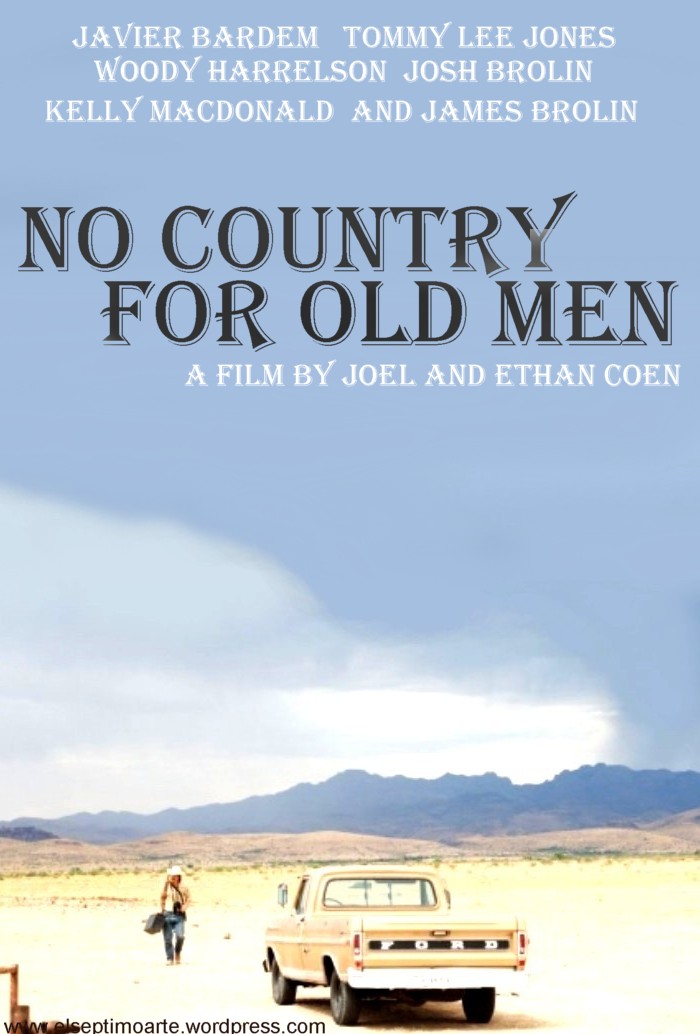
The new Coen Brothers movie is about as intense a movie as i have seen. It makes Eastern Promises look like The little mermaid. Not to be missed.

How not to kill your kids

Honey the Best Remedy for Coughs
Winter means colds, and colds mean sore, scratchy throats and coughs. Wired reports that, according to a study by the Pennsylvania State University College of Medicine, the best remedy for that cough may not be your over-the-counter cough medicine, but the old folk favorite, honey. The study actually focused on children (for whom stronger cold medicines aren't recommended), and although I doubt honey can knock you out like a spoonful of NyQuil, the honey stood up very well in the tests, consistently outscoring cough medicine in parents' ratings of their children's symptoms. Plus, who wouldn't down a spoonful of tasty honey any day if it yields results and means you won't need to choke down NyQuil?
Study: Try Honey for Children's Coughs [Wired]

Mondo Globo: the bill of rights under Bush
By Phil Leggiere, writing for QuestionAuthority
Vote for this on Digg | Reddit
2001
January
Presidential directive delays indefinitely the scheduled release of presidential documents (authorized by the Presidential Records Act of 1978) pertaining to the Reagan-Bush administration. Link
Bush and Cheney begin process of radically broadening scope of documents and information which can be deemed classified. Link
February
The National Security Agency (NSA) sets up Project Groundbreaker, a domestic call monitoring program infrastructure. Link
Spring
Bush administration order authorizes NSA monitoring of domestic phone and internet traffic. Link
May
US Supreme Court rules that medical necessity is not a permissible defense against federal marijuana statutes. Link
September
In immediate aftermath of 9-11 terror attacks, Department of Justice authorizes detention without charge for any terror suspects. Over one thousand suspects are brought into detention over the next several months. Link (pdf)
October
Attorney General John Ashcroft announces change in Department of Justice (DOJ) policy. According to the new policy DOJ will impose far more stringent criteria for the granting of Freedom of Information Act requests. Link
September-October
NSA launches massive new database of information on US phone calls. Link
October
The USA Patriot Act becomes law. Among other things the law: makes it a crime for anyone to contribute money or material support for any group on the State Department’s Terror Watch List, allows the FBI to monitor and tape conversations between attorneys and clients, allows the FBI to order librarians to turn over information about patron’s reading habits, allows the government to conduct surveillance on internet and email use of US citizens without notice. The act also calls for expanded use of National Security Letters (NSLs), which allow the FBI to search telephone, email and financial records of US citizens without a court order, exempts the government from needing to reveal how evidence against suspected terrorists was obtained and authorizes indefinite detention of immigrants at the discretion of law enforcement and immigration authorities.
NJ Superior court judge and civil liberties scholar Anthony Napolitano, author of A Nation of Sheep, has described the law’s assault on first and fourth amendment principles as follows, “The Patriot Act’s two most principle constitutional errors are an assault on the Fourth Amendment, and on the First. It permits federal agents to write their own search warrants [under the name “national security letters”] with no judge having examined evidence and agreed that it’s likely that the person or thing the government wants to search will reveal evidence of a crime… Not only that, but the Patriot Act makes it a felony for the recipient of a self-written search warrant to reveal it to anyone. The Patriot Act allows [agents] to serve self-written search warrants on financial institutions, and the Intelligence Authorization Act of 2004 in Orwellian language defines that to include in addition to banks, also delis, bodegas, restaurants, hotels, doctors' offices, lawyers’ offices, telecoms, HMOs, hospitals, casinos, jewelry dealers, automobile dealers, boat dealers, and that great financial institution to which we all would repose our fortunes, the post office. Link 1 | Link 2
November
Executive order limits release of presidential documents. The order gives incumbent presidents the right to veto requests to open any past presidential records and supercedes the congressionally passed law of 1978 mandating release of all presidential records not explicitly deemed classified. Link
2002
Winter
FBI and Department of Defense (DOD), forbidden by law from compiling databases on US citizens, begin contracting with private database firm ChoicePoint to collect, store, search and maintain data. Link
Spring
Secret executive order issued authorizing NSA to wiretap the phones and read emails of US citizens. Link
Spring
Transportation Security Adminstration (TSA) acknowledges it has created both a “No Fly” and a separate “Watch” list of US travelers. Link
May
Department of Justice authorizes the FBI to monitor political and religious groups. The new rules permit the FBI to broadly search or monitor the internet for evidence of criminal activity without having any tips or leads that a specific criminal act has been committed. Link
June
Supreme Court upholds the right of school administrators to conduct mandatory drug testing of students without probable cause. Link
November
Homeland Security Act of 2002 establishes separate Department of Homeland Security. Among other things the department will federally coordinate for the first time all local and state law enforcement nationwide and run a Directorate of Information and Analysis with authority to compile comprehensive data on US citizens using public and commercial records including credit card, phone, bank, and travel. The department also will be exempt form Freedom of Information Act disclosure requirements. The Homeland Security department’s jurisdiction has been widely criticized for being nebulously defined and has extended beyond terrorism into areas including immigration, pornography and drug enforcement. Link 1 | Link 2
2003
February
Draft of Domestic Security Enhancement Act (aka Patriot Act 2), a secret document prepared by the Department of Justice is leaked by the Center for Public Integrity. Provisions of the February 7th draft version included:
Removal of court-ordered prohibitions against police agencies spying on domestic groups.
The FBI would be granted powers to conduct searches and surveillance based on intelligence gathered in foreign countries without first obtaining a court order.
Creation of a DNA database of suspected terrorists.
Prohibition of any public disclosure of the names of alleged terrorists including those who have been arrested.
Exemptions from civil liability for people and businesses who voluntarily turn private information over to the government.
Criminalization of the use of encryption to conceal incriminating communications.
Automatic denial of bail for persons accused of terrorism-related crimes, reversing the ordinary common law burden of proof principle. All alleged terrorists would be required to demonstrate why they should be released on bail rather than the government being required to demonstrate why they should be held.
Expansion of the list of crimes eligible for the death penalty.
The United States Environmental Protection Agency would be prevented from releasing "worst case scenario" information to the public about chemical plants.
United States citizens whom the government finds to be either members of, or providing material support to, terrorist groups could have their US citizenship revoked and be deported to foreign countries.
Although the bill itself has never (yet) been advanced in congress due to public exposure, some of its provisions have become law as parts of other bills. For example The Intelligence Authorization Act for Fiscal Year 2004 grants the FBI unprecedented power to obtain records from financial institutions without requiring permission from a judge. Under the law, the FBI does not need to seek a court order to access such records, nor does it need to prove just cause. Link 1 | Link 2
March
Executive order issued which radically tightens the declassification process of classified government documents, as well as making it far easier for government agencies to make and keep information classified. The order delayed by three years the release of declassified government documents dating from 1978 or earlier. It also allowed the government to treat all material sent to American officials from foreign governments -- no matter how routine -- as subject to classification, and expanded the ability of Central Intelligence Agency (CIA) to shield documents from declassification. Finally it gave the vice president the power to classify information. Link 1 | Link 2
March
In a ruling seen as a victory for the concentration of ownership of intellectual property and an erosion of the public domain, the Supreme Court in Eldred v. Ashcroft held that a 20-year extension of the copyright period (from 50 years after the death of the author to 70 years) called for by the Sonny Bono copyright Extension not violate either the Copyright Clause or the First Amendment. Link
April
In Demore v. Kim, the Supreme Court ruled that even permanent residents could be subject to mandatory detention when facing deportation based on a prior criminal conviction, without any right to an individualized hearing to determine whether they were dangerous or a flight risk. Link
Fall
The FBI changes its traditional policy of destroying all data and documents collected on innocent citizens in the course of criminal investigations. This information would, according to the bureau, now be permanently stored. Two years later in late 2005 Executive Order 13388, expanded access to those files for "state, local and tribal" governments and for "appropriate private sector entities," which are not defined. Link 1 | Link 2
Fall
As authorized by the Patriot Act, the FBI expands the practice of national security letters. NSLs, originally introduced in the 1970s for espionage and terrorism investigations, enabled the FBI to review in secret the customer records of suspected foreign agents. This was extended by the Patriot Act to include permitting clandestine scrutiny of all U.S. residents and visitors whether suspected of terrorism or not. Link
2004
January
The FBI begins keeping a database of US citizens based on information obtained via NSLs. Link
Spring
John Ashcroft invokes State Secrets privilege to forbid former FBI translator Sibel Edmunds from testifying in a case brought by families of victims of the 9-11 attacks. Litigation by 9-11 families is subsequently halted. Link 1 | Link 2
June
Supreme Court upholds Nevada state law allowing police to arrest suspects who refuse to provide identification based on police discretion of “reasonable suspicion.” Link
2005
January
Supreme court rules that police do not need to have probable cause to have drug sniffing dogs examine cars stopped for routine traffic violations. Link 1 | Link 2
June
Supreme Court rules that the federal government can prosecute medical marijuana users even in states which have laws permitting medical marijuana. Link
Summer
The Patriot Act, due to expire at the end of 2005, is reauthorized by Congress. Link
Winter 2005
Senate blocks reauthorization of certain clauses in Patriot Act. Link
2006
March
Senate passes amended version of Patriot Act, reauthorization, with three basic changes from the original including: recipients of secret court orders to turn over sensitive information on individuals linked to terrorism investigations are not allowed to disclose those orders but can challenge the gag order after a year, libraries would not be required to turn over information without the approval of a judge, recipients of an FBI "national security letter" -- an investigator's demand for access to personal or business information -- would not have to tell the FBI if they consult a lawyer. New bill also said to extend Congressional oversight over executive department usage guidelines. Shortly after bill is signed George Bush declares oversight rules are not binding. Link 1 | Link 2
June
Supreme court rules that evidence obtained in violation of the “knock and announce” rules can still be permitted in court. Link
September
US Congress and Senate approve the Military Commissions Act, which authorizes torture and strips non- US citizen detainees suspected of terrorist ties of the right of habeas corpus (which includes formal charges, counsel and hearings). It also empowers US presidents at their discretion to declare US citizens as enemy combatants and subject to detention without charge or due process. Link 1 | Link 2 | Link 3
October
John Warner Defense Authorization Act is passed. The act allows a president to declare a public emergency and station US military troops anywhere in America as well as take control of state based national guard units without consent of the governor or other local authorities. The law authorizes presidential deployment of US troops to round-up and detain “potential terrorists”, “illegal aliens” and “disorderly” citizenry. Link 1 | Link 2
2007
May
National Security Presidential Directive 51 (NSPD-51) establishes a new post-disaster plan (with disaster defined as any incident, natural or man-made, resulting in extraordinary mass casualties, damage or disruption) which places the president in charge of all three branches of government. The directive overrides the National Emergencies Act which gives Congress power to determine the duration of a national emergency. Link 1 | Link 2
June
In “Bong Hits for Jesus” case Supreme court rules that student free speech rights do not extend to promotion of drug use. Link
July
Executive Order 13438: "Blocking Property of Certain Persons Who Threaten Stabilization Efforts in Iraq, issued. The order asserts the government’s power to confiscate the property “of persons determined to have committed, or to pose a significant risk of committing, an act or acts of violence that have the purpose or effect of threatening the peace or stability of Iraq or the Government of Iraq or undermining efforts to promote economic reconstruction and political reform in Iraq or to provide humanitarian assistance to the Iraqi people."
October
The Violent Radicalization and Homegrown Terrorism Act passes the House of Representatives 400 to 6 (to be voted on in the Senate in 2008). The act proposes the establishment of a commission composed of members of the House and Senate, Homeland Security and others, to "examine and report upon the facts and causes of violent radicalization, homegrown terrorism, and ideologically based violence in the United States” and specifically the role of the internet in fostering and disseminating extremism. According to the bill the term `violent radicalization' means the process of adopting or promoting an extremist belief system for the purpose of facilitating ideologically based violence to advance political, religious, or social change, while the term 'ideologically-based violence' means the use, planned use, or threatened use of force or violence by a group or individual to promote the group or individual's political, religious, or social beliefs.” Link 1 | Link 2 | Link 3
Vote for this on Digg | Reddit
If you value your civil liberties, consider joining MondoGlobo now...
Other research sources
James Bovard, Attention Deficit Democracy , 2007 Palgrave Macmillan
Elaine Cassel,The War on Civil Liberties: How Bush and Ashcroft Have Dismantled t... , 2004 Lawrence Hill Books
Anthony Napolitano, A Nation of Sheep , 2007 Thomas Nelson
Cooperative Research Commons
Vote for this on Digg | Reddit
2001
January
Presidential directive delays indefinitely the scheduled release of presidential documents (authorized by the Presidential Records Act of 1978) pertaining to the Reagan-Bush administration. Link
Bush and Cheney begin process of radically broadening scope of documents and information which can be deemed classified. Link
February
The National Security Agency (NSA) sets up Project Groundbreaker, a domestic call monitoring program infrastructure. Link
Spring
Bush administration order authorizes NSA monitoring of domestic phone and internet traffic. Link
May
US Supreme Court rules that medical necessity is not a permissible defense against federal marijuana statutes. Link
September
In immediate aftermath of 9-11 terror attacks, Department of Justice authorizes detention without charge for any terror suspects. Over one thousand suspects are brought into detention over the next several months. Link (pdf)
October
Attorney General John Ashcroft announces change in Department of Justice (DOJ) policy. According to the new policy DOJ will impose far more stringent criteria for the granting of Freedom of Information Act requests. Link
September-October
NSA launches massive new database of information on US phone calls. Link
October
The USA Patriot Act becomes law. Among other things the law: makes it a crime for anyone to contribute money or material support for any group on the State Department’s Terror Watch List, allows the FBI to monitor and tape conversations between attorneys and clients, allows the FBI to order librarians to turn over information about patron’s reading habits, allows the government to conduct surveillance on internet and email use of US citizens without notice. The act also calls for expanded use of National Security Letters (NSLs), which allow the FBI to search telephone, email and financial records of US citizens without a court order, exempts the government from needing to reveal how evidence against suspected terrorists was obtained and authorizes indefinite detention of immigrants at the discretion of law enforcement and immigration authorities.
NJ Superior court judge and civil liberties scholar Anthony Napolitano, author of A Nation of Sheep, has described the law’s assault on first and fourth amendment principles as follows, “The Patriot Act’s two most principle constitutional errors are an assault on the Fourth Amendment, and on the First. It permits federal agents to write their own search warrants [under the name “national security letters”] with no judge having examined evidence and agreed that it’s likely that the person or thing the government wants to search will reveal evidence of a crime… Not only that, but the Patriot Act makes it a felony for the recipient of a self-written search warrant to reveal it to anyone. The Patriot Act allows [agents] to serve self-written search warrants on financial institutions, and the Intelligence Authorization Act of 2004 in Orwellian language defines that to include in addition to banks, also delis, bodegas, restaurants, hotels, doctors' offices, lawyers’ offices, telecoms, HMOs, hospitals, casinos, jewelry dealers, automobile dealers, boat dealers, and that great financial institution to which we all would repose our fortunes, the post office. Link 1 | Link 2
November
Executive order limits release of presidential documents. The order gives incumbent presidents the right to veto requests to open any past presidential records and supercedes the congressionally passed law of 1978 mandating release of all presidential records not explicitly deemed classified. Link
2002
Winter
FBI and Department of Defense (DOD), forbidden by law from compiling databases on US citizens, begin contracting with private database firm ChoicePoint to collect, store, search and maintain data. Link
Spring
Secret executive order issued authorizing NSA to wiretap the phones and read emails of US citizens. Link
Spring
Transportation Security Adminstration (TSA) acknowledges it has created both a “No Fly” and a separate “Watch” list of US travelers. Link
May
Department of Justice authorizes the FBI to monitor political and religious groups. The new rules permit the FBI to broadly search or monitor the internet for evidence of criminal activity without having any tips or leads that a specific criminal act has been committed. Link
June
Supreme Court upholds the right of school administrators to conduct mandatory drug testing of students without probable cause. Link
November
Homeland Security Act of 2002 establishes separate Department of Homeland Security. Among other things the department will federally coordinate for the first time all local and state law enforcement nationwide and run a Directorate of Information and Analysis with authority to compile comprehensive data on US citizens using public and commercial records including credit card, phone, bank, and travel. The department also will be exempt form Freedom of Information Act disclosure requirements. The Homeland Security department’s jurisdiction has been widely criticized for being nebulously defined and has extended beyond terrorism into areas including immigration, pornography and drug enforcement. Link 1 | Link 2
2003
February
Draft of Domestic Security Enhancement Act (aka Patriot Act 2), a secret document prepared by the Department of Justice is leaked by the Center for Public Integrity. Provisions of the February 7th draft version included:
Removal of court-ordered prohibitions against police agencies spying on domestic groups.
The FBI would be granted powers to conduct searches and surveillance based on intelligence gathered in foreign countries without first obtaining a court order.
Creation of a DNA database of suspected terrorists.
Prohibition of any public disclosure of the names of alleged terrorists including those who have been arrested.
Exemptions from civil liability for people and businesses who voluntarily turn private information over to the government.
Criminalization of the use of encryption to conceal incriminating communications.
Automatic denial of bail for persons accused of terrorism-related crimes, reversing the ordinary common law burden of proof principle. All alleged terrorists would be required to demonstrate why they should be released on bail rather than the government being required to demonstrate why they should be held.
Expansion of the list of crimes eligible for the death penalty.
The United States Environmental Protection Agency would be prevented from releasing "worst case scenario" information to the public about chemical plants.
United States citizens whom the government finds to be either members of, or providing material support to, terrorist groups could have their US citizenship revoked and be deported to foreign countries.
Although the bill itself has never (yet) been advanced in congress due to public exposure, some of its provisions have become law as parts of other bills. For example The Intelligence Authorization Act for Fiscal Year 2004 grants the FBI unprecedented power to obtain records from financial institutions without requiring permission from a judge. Under the law, the FBI does not need to seek a court order to access such records, nor does it need to prove just cause. Link 1 | Link 2
March
Executive order issued which radically tightens the declassification process of classified government documents, as well as making it far easier for government agencies to make and keep information classified. The order delayed by three years the release of declassified government documents dating from 1978 or earlier. It also allowed the government to treat all material sent to American officials from foreign governments -- no matter how routine -- as subject to classification, and expanded the ability of Central Intelligence Agency (CIA) to shield documents from declassification. Finally it gave the vice president the power to classify information. Link 1 | Link 2
March
In a ruling seen as a victory for the concentration of ownership of intellectual property and an erosion of the public domain, the Supreme Court in Eldred v. Ashcroft held that a 20-year extension of the copyright period (from 50 years after the death of the author to 70 years) called for by the Sonny Bono copyright Extension not violate either the Copyright Clause or the First Amendment. Link
April
In Demore v. Kim, the Supreme Court ruled that even permanent residents could be subject to mandatory detention when facing deportation based on a prior criminal conviction, without any right to an individualized hearing to determine whether they were dangerous or a flight risk. Link
Fall
The FBI changes its traditional policy of destroying all data and documents collected on innocent citizens in the course of criminal investigations. This information would, according to the bureau, now be permanently stored. Two years later in late 2005 Executive Order 13388, expanded access to those files for "state, local and tribal" governments and for "appropriate private sector entities," which are not defined. Link 1 | Link 2
Fall
As authorized by the Patriot Act, the FBI expands the practice of national security letters. NSLs, originally introduced in the 1970s for espionage and terrorism investigations, enabled the FBI to review in secret the customer records of suspected foreign agents. This was extended by the Patriot Act to include permitting clandestine scrutiny of all U.S. residents and visitors whether suspected of terrorism or not. Link
2004
January
The FBI begins keeping a database of US citizens based on information obtained via NSLs. Link
Spring
John Ashcroft invokes State Secrets privilege to forbid former FBI translator Sibel Edmunds from testifying in a case brought by families of victims of the 9-11 attacks. Litigation by 9-11 families is subsequently halted. Link 1 | Link 2
June
Supreme Court upholds Nevada state law allowing police to arrest suspects who refuse to provide identification based on police discretion of “reasonable suspicion.” Link
2005
January
Supreme court rules that police do not need to have probable cause to have drug sniffing dogs examine cars stopped for routine traffic violations. Link 1 | Link 2
June
Supreme Court rules that the federal government can prosecute medical marijuana users even in states which have laws permitting medical marijuana. Link
Summer
The Patriot Act, due to expire at the end of 2005, is reauthorized by Congress. Link
Winter 2005
Senate blocks reauthorization of certain clauses in Patriot Act. Link
2006
March
Senate passes amended version of Patriot Act, reauthorization, with three basic changes from the original including: recipients of secret court orders to turn over sensitive information on individuals linked to terrorism investigations are not allowed to disclose those orders but can challenge the gag order after a year, libraries would not be required to turn over information without the approval of a judge, recipients of an FBI "national security letter" -- an investigator's demand for access to personal or business information -- would not have to tell the FBI if they consult a lawyer. New bill also said to extend Congressional oversight over executive department usage guidelines. Shortly after bill is signed George Bush declares oversight rules are not binding. Link 1 | Link 2
June
Supreme court rules that evidence obtained in violation of the “knock and announce” rules can still be permitted in court. Link
September
US Congress and Senate approve the Military Commissions Act, which authorizes torture and strips non- US citizen detainees suspected of terrorist ties of the right of habeas corpus (which includes formal charges, counsel and hearings). It also empowers US presidents at their discretion to declare US citizens as enemy combatants and subject to detention without charge or due process. Link 1 | Link 2 | Link 3
October
John Warner Defense Authorization Act is passed. The act allows a president to declare a public emergency and station US military troops anywhere in America as well as take control of state based national guard units without consent of the governor or other local authorities. The law authorizes presidential deployment of US troops to round-up and detain “potential terrorists”, “illegal aliens” and “disorderly” citizenry. Link 1 | Link 2
2007
May
National Security Presidential Directive 51 (NSPD-51) establishes a new post-disaster plan (with disaster defined as any incident, natural or man-made, resulting in extraordinary mass casualties, damage or disruption) which places the president in charge of all three branches of government. The directive overrides the National Emergencies Act which gives Congress power to determine the duration of a national emergency. Link 1 | Link 2
June
In “Bong Hits for Jesus” case Supreme court rules that student free speech rights do not extend to promotion of drug use. Link
July
Executive Order 13438: "Blocking Property of Certain Persons Who Threaten Stabilization Efforts in Iraq, issued. The order asserts the government’s power to confiscate the property “of persons determined to have committed, or to pose a significant risk of committing, an act or acts of violence that have the purpose or effect of threatening the peace or stability of Iraq or the Government of Iraq or undermining efforts to promote economic reconstruction and political reform in Iraq or to provide humanitarian assistance to the Iraqi people."
October
The Violent Radicalization and Homegrown Terrorism Act passes the House of Representatives 400 to 6 (to be voted on in the Senate in 2008). The act proposes the establishment of a commission composed of members of the House and Senate, Homeland Security and others, to "examine and report upon the facts and causes of violent radicalization, homegrown terrorism, and ideologically based violence in the United States” and specifically the role of the internet in fostering and disseminating extremism. According to the bill the term `violent radicalization' means the process of adopting or promoting an extremist belief system for the purpose of facilitating ideologically based violence to advance political, religious, or social change, while the term 'ideologically-based violence' means the use, planned use, or threatened use of force or violence by a group or individual to promote the group or individual's political, religious, or social beliefs.” Link 1 | Link 2 | Link 3
Vote for this on Digg | Reddit
If you value your civil liberties, consider joining MondoGlobo now...
Other research sources
James Bovard, Attention Deficit Democracy
, 2007 Palgrave MacmillanElaine Cassel,The War on Civil Liberties: How Bush and Ashcroft Have Dismantled t...
, 2004 Lawrence Hill BooksAnthony Napolitano, A Nation of Sheep
, 2007 Thomas NelsonCooperative Research Commons
Tuesday, December 4, 2007
irony
The funny thing is, Gabe is the one that is least likely to respond to emails. If there is a response, it is full of sarcasm or smartassm. I think it is great that you want to share the love even more. Love you.
Daph
Daph
Welcome!
Hi everyone, due to the recent hilarious emails we have all been sending recently, I've decided to create a family blog. Daph can post pictures, Bobby can post racist and sexual humor, and everyone else can post anything they want.
Login info is the same for everyone, and i've created a gmail and you tube account which have the same login/password. just log in to you tube to post videos.
play around with it. It's pretty user friendly.
Have Fun!
Login: oldleedslane@gmail.com
pass: heysaint

Subscribe to:
Posts (Atom)
